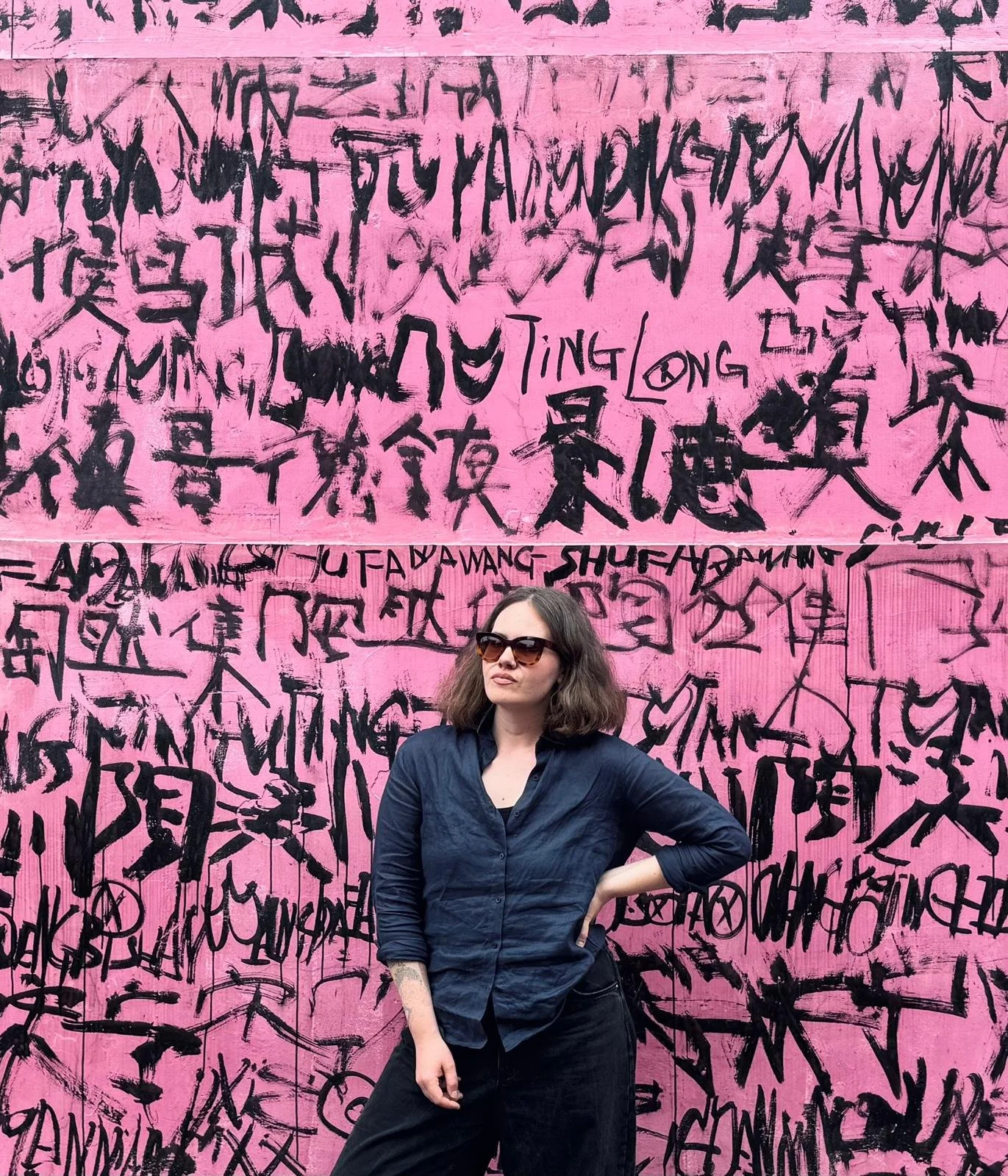
Evgenia Kirshtein was born in Saint Petersburg, where she trained as an art restorer at the Roerich Art School, working with paintings damaged by time and neglect. She immigrated to Israel in 2011 and completed a BFA in Ceramics and Glass Design at Bezalel Academy of Arts and Design in 2021.
In 2023, she was invited as a guest artist to create the official Google Doodle celebrating Israeli activist Gila Goldstein, hand-crafted in clay. The original ceramic work is held at the Google Israel office in Tel Aviv.
Her work has been shown in solo exhibitions at BY.5 Gallery of the Ceramic Artists Association of Israel, Tel Aviv (2024), and Periscope Contemporary Design Gallery, Tel Aviv (2023). Recent group exhibitions include the Tel Aviv Biennale of Crafts and Design at MUZA Eretz Israel Museum (2023 and 2026), the Museum of Philistine Culture in Ashdod (2024–2025), Schonfeld Gallery in Brussels, Galerie Joseph during Paris Design Week, and international ceramic exhibitions in Jingdezhen and Yixing, China. Her work is held in the permanent collections of MUZA Eretz Israel Museum, the Edmond de Rothschild Foundation, Ceramic Art Avenue in Jingdezhen, and Google Israel.
She is a recipient of the Maizler Award for Excellence in Design, the Andy COVID-19 Support Award, and the Yitzhak and Eva Elfer Prize for Academic Excellence, and was a fellow of the Art and Design Incubator at the Edmond de Rothschild Center. She is a member of the Ceramic Artists Association of Israel (CAAI).
Artist statement
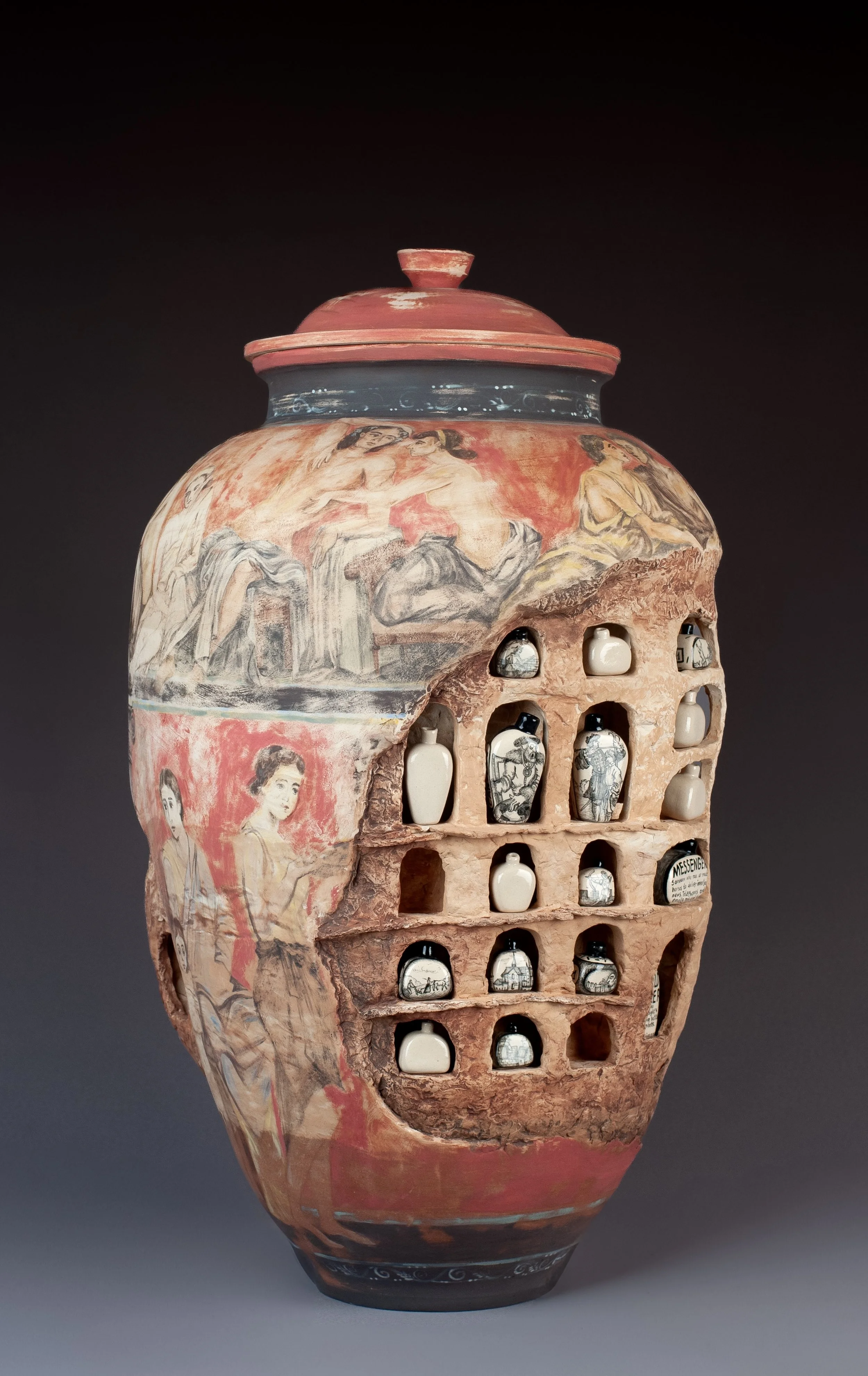
I work with ceramics as a narrative and formal system, in which image, object, and structure exist simultaneously. My vessels are not neutral carriers: form, surface, and painting are equal within them and mutually define one another.
Unlike painting, where the image is given all at once, a vessel never fully reveals itself. The viewer encounters fragments that require movement and rotation. I work deliberately with partial vision, with the impossibility of a single, simultaneous reading.
My practice is shaped by my experience in painting restoration, where I worked with artworks altered by time, loss, and intervention. This led me to understand the image as a layer rather than a finished surface.
I move freely between form and image, using hand-building and painting as a single language. Asymmetry, relief, and structure are established before the narrative emerges and shape its unfolding. The image does not illustrate the form but enters into dialogue with it — at times supporting, at times disrupting its logic.
My work carries a field of references to the history of art, from ancient vessels to decorative and domestic forms, but these quotations are neither fixed nor hierarchical. They are used as material that can be shifted, treated with irony, or woven into a new system of images.
I approach the vessel as a form that holds emptiness and meaning at once — a structure capable of working with what cannot be fully spoken. In my work, this emerges through the multiplicity of elements, the fragmentation of the image, and a tension between the decorative and the substantive, the private and the shared, direct statement and what is held back.